

virtuous life : ค้นหาหนังสือธรรมะ หน้า 2 / 7
หน้าหนังสือทั้งหมด
154
Confronting Life's Inherent Sufferings
"Even though we may dislike difficulties and welcome
happiness, there is no way to avoid suffering in our lives
because life is a mixture of suffering and happiness. Instead,
we should prepare for the
This text discusses the duality of suffering and happiness in life. It emphasizes the natural forms of suffering such as aging, sickness, and death that everyone faces. Many people distract themselves
24
Monastic vs Secular Life: Insights from Buddhism
Monastic v.s Secular Life
Monica
Luang Por
24
: Good, thank you. What do the monks think about
family life? And do you consider family life to be a
distraction from your faith?
: Family life is restri
In this discussion, monks explore the contrasting paths of monastic and secular life. Family life, likened to a fish in a tank, is seen as restrictive, potentially obstructing the journey towards Arah
32
The Importance of a Calm Mind in the Face of Uncertainty
Base on this truth, whether we are content or not, as humans, we must learn to have calm and unwavering minds, not to be frightened of life's uncertainties, and know how to remain alert, like the eart
This content emphasizes the importance of maintaining a calm and unwavering mind amidst life's uncertainties. Drawing from the teachings of the Lord Buddha to Venerable Rahula, it illustrates the need
155
Reflections on Death: Cultivating Merit and Purpose in Life
do not know when we are going to die. We must sooner or later be separated from all loved ones and treasured things.
How can people think about death?
1. Thinking about death with the false view: Th
In contemplating death, there are varied perspectives. The false view neglects merit and life’s purpose, while the right view emphasizes the importance of good deeds before we die. Life’s ultimate goa
14
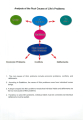
Analysis of the Root Causes of Life’s Problems
Analysis of the Root Causes of Life’s Problems
The Root Causes of Life’s Problems
Economic Problems Conflicts Defilements
Buddhism
The Individual
The Mind
Habits
Root Causes of Life’s Problems
This text discusses the analysis of life’s problems through a Buddhist lens, identifying economic issues, conflicts, and personal defilements as root causes. It asserts that these problems originate f
7
The Impact of Upbringing on Character Development
One day in first grade, Luang Por brought his best friend to his house. His father asked him what his friend's family name was, and after his friend had left, forbade him to associate or play with tha
This narrative illustrates the importance of a good upbringing as exemplified by Luang Por’s life. His father’s strict but wise teachings shaped his character, guiding him in choosing friends and reso
123
The Teachings of the Lord Buddha
1. The mentor should have an unambiguous biography. There must be proof of his life history; it can not be vague and unreliable.
2. He must be extremely intelligent, exceptionally virtuous, exceedingl
The mentor should have a clear biography and proven life history. Lord Buddha fits this as His documented life is a testament to His wisdom and virtue. He sought truth independently, achieving enlight
72
Understanding the Levels of Dhammakāya and Noble Disciples
In regard to the different levels of dhammakāya, the canon talks about the different states of trainees (sekha) and non-trainees (asekha). The former refers to states in which a further course is yet
The text elaborates on the different levels of dhammakāya, categorizing trainees and non-trainees based on their qualities and practices. Trainees are seen as individuals who still have further course
52
Dakkhīnāvibhaga Sutta: The Purity of Offerings
52
The Virtue of Absorbing
6. Dakkhīnāvibhaga Sutta
There is the offering that is purified by the giver, not by the receiver.
There is the offering that is purified by the receiver, not by th
The Dakkhīnāvibhaga Sutta discusses the concept of offering purification by the giver and receiver. It differentiates four types of offerings: purified by the giver, by the receiver, by neither, and b
55
Raising a Child to be Wholesome
Raising a Child to be Wholesome
Wholesome children have parents who have taught them
to have discipline in both their worldly lives and in Dhamma.
Discipline is taught in conjunction with their use of
การเลี้ยงดูเด็กให้มีความดีงามนั้นเริ่มจากการสร้างวินัยทั้งในชีวิตประจำวันและในด้านธรรมะ โดยการตั้งตัวอย่างที่ดีจากพ่อแม่ ผู้ปกครองควรสอนเด็กให้มีวินัยในการพูด การใช้เวลา ความสะอาด และการจัดระเบียบ เพื
164
Characteristics of Fruitful Elderly Individuals
The second type of elderly person is called "A Fruitful
Person," a philanthropist or altruist.
Throughout their lives, these elderly people have
diligently earned their livelihood, and are well prepar
The text discusses the qualities of 'Fruitful Persons,' elderly individuals who exemplify self-sufficiency and altruism. They live by Buddhist principles, offer alms, adhere to precepts, and meditate
117
Truth for the Family: Understanding Life and Kamma
Part Five: Truth for the Family
has given me an understanding of life in a new way. Firstly,
death is not the end. We still have to be reborn as long as
we have not gotten rid of our own kilesa. Secon
Part Five of 'Truth for the Family' delves into profound insights on life, emphasizing that death is not the end and that our virtues and vices have consequences. It explores the concepts of kamma and
30
Understanding Parenting and Marital Life
may feed, raise, teach and do everything for the child,
she cannot expect him or her to be everything she
wants him or her to be. Sometimes the child would
obey her but other times they would not. As
This text discusses the nature of parenting, emphasizing that while parents nurture children, they can't entirely control their development. It highlights the limitations of married life, likening it
31
Born Alone, Die Alone
16. BORN ALONE, DIE ALONE
We were born alone and we will die alone.
There is no need to worry about others if we can't even save ourselves.
If we can't save ourselves, and don't have a firm grip on o
Life is fleeting and solitary; focus on saving oneself before aiding others. With the knowledge of Buddhism, one must act promptly to reap its benefits or risk a wasted life. Achieving Perfections and
123
The Great Refuge of Humankind: Understanding the Teachings of the Lord Buddha
1. The mentor should have an unambiguous
biography. There must be proof of his life history; it can not
be vague and unreliable.
2. He must be extremely intelligent, exceptionally
virtuous, exceedingl
This text examines the criteria for an exemplary mentor, using the Lord Buddha as a prime example. It highlights the importance of a well-documented biography, exceptional knowledge, and the ability t
164
Understanding the Fruitful Elderly: A Guide to Altruism and Wisdom
The second type of elderly person is called “A Fruitful Person,” a philanthropist or altruist. Throughout their lives, these elderly people have diligently earned their livelihood, and are well prepar
The second type of elderly individual, termed 'A Fruitful Person', exemplifies philanthropy and self-sufficiency. These individuals have not only prepared well for their later years but have also enga
35
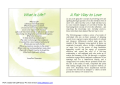
The Essence of Life and Love
What is Life?
What is life?
A fantasy lived half asleep
Which disappears at dawn,
Or time we borrow but cannot keep
Soon to be repaid with interest?
Life so far has been merely a reflection upon water
บทความนี้สอบถามธรรมชาติของชีวิตและความรักผ่านมุมมองของธัมมา เปรียบเทียบชีวิตกับจินตนาการและการแสวงหาความสุขที่แท้จริง ในเนื้อหาเสนอเรื่องราวจริงจากผู้ที่บรรลุ 'Lovely Love' ผ่านการใช้ความรู้ทางธรรมในช
25
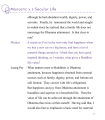
Monastic vs Secular Life in Buddhism
Monastic v.s Secular Life
Monica
Luang Por
although he had abundant wealth, dignity, power, and
servants. Finally, he renounced the world and sought
to ordain since he realized that a family life does
This text discusses the differences between monastic and secular life through the eyes of a Buddhist perspective. It highlights how a renunciation of material wealth and societal status opens the path
14
Achieving Happiness Through Dhamma Practice
Concerning the second level, if our wish is indeed to
go to a happy place after death, we can do so by learning and
practicing the Dhamma. We will thus be taught to practice
generosity, keep acts of s
This text emphasizes the significance of practicing Dhamma to achieve happiness in life and after death. By cultivating generosity, maintaining self-discipline, and engaging in meditation, individuals
307
Meditation in Everyday Life
Meditation in Everyday Life
remind you. We do these things on a daily basis
not because someone compels us to, but rather
because they are necessities in life. This is in the
same way that meditation
Meditation is essential for mental health, much like daily physical activities are for the body. Engaging in meditation daily enhances your well-being and can become a natural part of life, just as br